LEFOO LFPC-1 Automatic Water Pump Controller
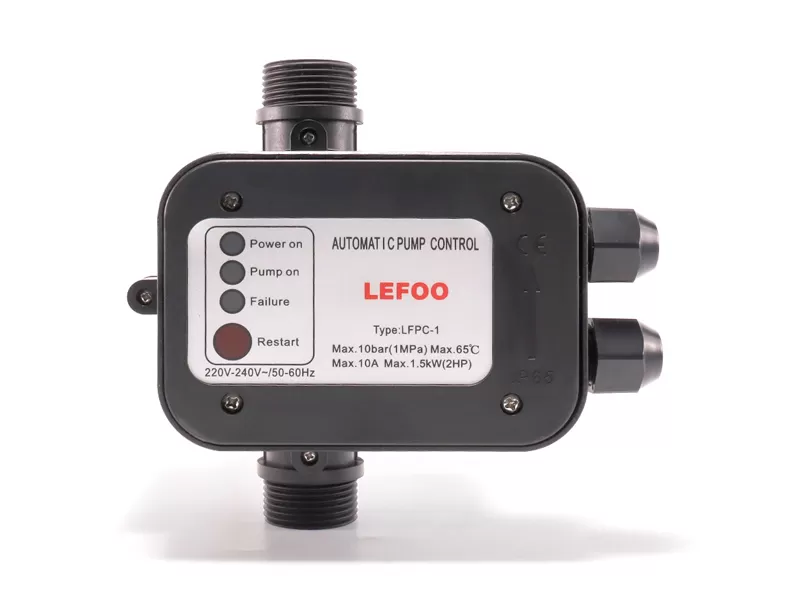
Automatic Electronic Water Pump Controller for water applications. Selection depends on the actual pressure configuration, electrical system and application limits—not only the body shape.
Model Identification & Key Specifications
Manufacturer Technical Data
LFPC-1 is an electronic automatic pump controller, not an ordinary dry-contact pressure switch: 220–240VAC 50/60Hz, 8A, maximum motor 1.5kW (2HP), 10bar max working, R1in, IP65 and 65°C operating maximum. Manufacturer expressly states factory 1.5bar start / 3.5bar stop settings are NOT adjustable, minimum pump motor >200W, no faucet between pump and controller and elevation to highest tap ≤15m. Compare full controller replacement to a separate pressure switch+dry run protection rather than claiming universal equivalence.
AirAlign Engineering Selection
LFPC-1 uses an electronic powered pump-control architecture rather than passive mechanical NC/NO contacts. The manufacturer says the default thresholds cannot be adjusted and prohibits installing a water tap between the pump and controller; the highest user outlet height is also limited to 15m. These conditions must be checked before replacing a pressure switch, adding a pressure vessel, or retrofitting a booster pump.
Compare cut-in and cut-out operating pressures, process medium and maximum permissible working pressure separately. When changing equipment, verify the original control function (automatic run control, high cutout, low-water safeguard or manual-reset protection) before wiring another device into the same circuit.
Installation and System Integration
Confirm motor starting duty, input voltage, contact topology, overload protection and any separate electrical isolation requirements. Component contact data is not a complete panel rating.
Match original pressure setting, allowed hysteresis, NPT versus G-thread, sealing method and safety relief protections; the switching band is not the burst pressure.
Review temperature, enclosure and cable entry for the installation location. An electronic controller also needs correct supply polarity, short-circuit protection and moisture control.
Manufacturer-listed conformity documents apply to the specific models and revisions stated; verify the exact ordered configuration.
Related Model Profiles
LEFOO LF16 · LEFOO LF10-W · LEFOO manufacturer profile · Pressure Switches
Official Manufacturer Resources
Independent AirAlign technical reference. No unverified product image has been substituted. Match original manufacturer datasheet, variant and certificate before procurement.
LFPC-1 — electronic water pump automatic restart
LFPC-1 uses electronic pressure/flow logic to automate a water pump, which can differ from an adjustable spring/diaphragm pressure switch. Commission start/stop thresholds, run-dry protection, reset delay and power-loss behavior against the exact model manual. Pump motor loading and surge protection must be checked at the controller’s electrical rating. A programmed restart after pressure recovery can be unsuitable where independent low-water safety protection is required.