What Is PM2.5? Understanding Fine Particulate Matter
PM2.5 is one of the most frequently mentioned terms in air quality — and one of the least understood. It refers to particles so small that dozens of them could fit across the width of a single human hair, and their size is exactly why they matter so much for health.
What Does “PM2.5” Actually Mean?
PM stands for particulate matter — a mix of solid particles and liquid droplets suspended in air. The number that follows describes the maximum diameter of those particles in micrometers (µm). PM2.5 refers to particles 2.5 micrometers or smaller in diameter; PM10 refers to particles up to 10 micrometers.
For scale, a single human hair is roughly 50–70 micrometers thick. That means dozens of PM2.5 particles could line up across the width of one strand of hair — small enough that they’re completely invisible to the naked eye, even at concentrations that affect health.
PM2.5 particles are roughly 20–30 times smaller in diameter than a human hair — small enough to bypass the body’s natural filtering and reach deep into the lungs.
Where Does PM2.5 Come From?
- Combustion sources — vehicle exhaust, wildfires, wood-burning stoves, and gas or wood cooking.
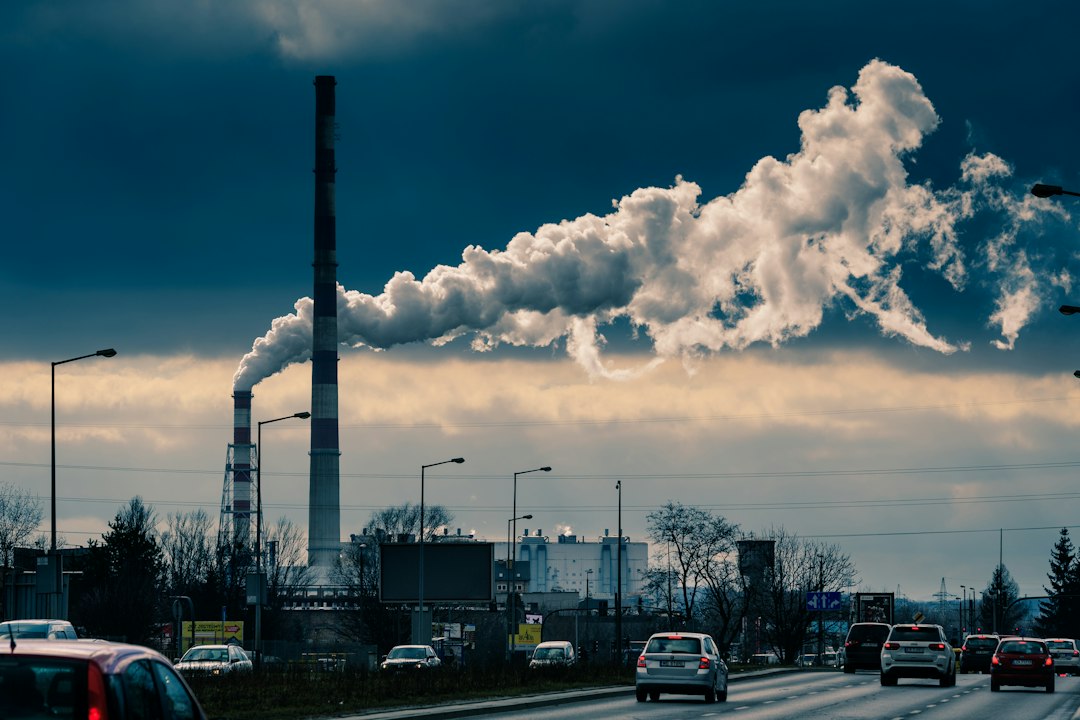
- Industrial emissions — factories, power plants, and construction activity.
- Indoor sources — frying and grilling, candles, tobacco smoke, and some cleaning or aerosol products.
- Secondary formation — some PM2.5 doesn’t come directly from a source at all; it forms in the atmosphere when gases like sulfur dioxide and nitrogen oxides react chemically.
Why Size Matters for Health
Larger particles (like PM10) are often trapped by the nose and upper airway. PM2.5 is small enough to travel past those defenses and reach deep into the lungs, and the smallest fraction can even pass into the bloodstream. This is why PM2.5, specifically, is the metric most closely tracked by health and environmental agencies worldwide.
How Is PM2.5 Measured?
PM2.5 is typically reported in micrograms per cubic meter of air (µg/m³). Regulatory-grade monitoring stations use precise reference methods, while consumer-grade indoor monitors typically use laser-based optical sensors — less precise, but useful for tracking relative changes and trends indoors, such as spikes during cooking.
What Counts as a “Good” PM2.5 Level?
Air quality guidelines vary somewhat between organizations and countries, but lower is consistently better, and there is no known threshold completely free of health risk. Rather than memorizing a single number, it’s more useful to understand PM2.5 as a continuum: guidance levels help interpret whether current air quality is good, moderate, or unhealthy, and short-term spikes (like from cooking) behave very differently from sustained, long-term outdoor pollution.
Key Takeaways
- PM2.5 refers to particles 2.5 micrometers or smaller — roughly 20–30 times smaller than a human hair.
- Its small size allows it to reach deep into the lungs, which is why it’s more closely tracked than larger particles like PM10.
- Sources range from outdoor combustion and industry to everyday indoor activities like cooking.
- Indoor monitors use optical sensors that are great for tracking trends, even if less precise than regulatory equipment.
- Lower PM2.5 is consistently better — there’s no fully “safe” threshold, only degrees of risk.