Figaro TGS5141-P00 — Carbon Monoxide Sensor
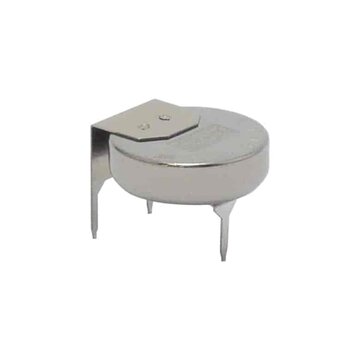
A compact electrochemical carbon monoxide sensing element intended for residential and commercial CO detectors and fire-detection systems.
Manufacturer: Figaro Engineering
Key technical details
| Target gas | Carbon monoxide (CO) |
|---|---|
| Principle | Electrochemical |
| Applications | Residential CO alarms; fire detection; monitoring integration |
| Integration note | Requires appropriate external electronics, calibration and complete detector validation |
Manufacturer source
Official product information and latest datasheet resources →
Data shown reflects publicly available manufacturer information. Confirm the ordering code, measuring conditions, model revision and required certification with the manufacturer before selection. A sensing component does not certify the finished detector.
Electrochemical CO cell: detector-level validation
TGS5141-P00 is an electrochemical carbon monoxide cell rather than a complete CO alarm. Its millivolt/current-type signal, sensing circuit and calibration must be implemented according to the Figaro technical file; do not assume it connects directly to an HVAC voltage or 4–20 mA controller input.
Where the intended product is a residential or commercial CO alarm, confirm the assembled instrument’s response to exposure duration, zero and span calibration, interfering gases, end-of-life signaling and alarm circuit supervision. A detector’s regulatory performance cannot be inherited from the electrochemical component alone. A separate installation decision is needed for life-safety or fire-detection service.
TGS5141-P00 — calibrated electrochemical carbon monoxide element — technical model review
Source-specific manufacturer specifications, test conditions and practical engineering distinctions. The stated model/range is not a blanket safety approval or a guarantee that related part codes perform identically.
| Parameter | OEM documentation | Engineering interpretation |
|---|---|---|
| Sensing chemistry | Electrochemical carbon-monoxide (CO) gas element | Measures target CO response, not optical CO₂ or combustible LEL. |
| Factory traceability | Manufacturer offers a sensitivity barcode for calibration during assembly | Barcode aids module integration; verify detector calibration and sensor-specific gain. |
| Target applications | Residential CO alarms, air-quality monitors and fire detection | Detection application is not automatic finished alarm compliance. |
| Component approvals | UL-recognized component; maker states supports designs meeting UL 2034, EN 50291 and EN 54-31 | A component recognition is not a tested/approved finished detector with buzzer, enclosure and power supply. |
| Output nature | Electrochemical element, requires suitable analogue front end | Do not describe a bare TGS5141-P00 as a 4–20 mA, Modbus or UART transmitter. |
| Technical limits | Full numerical ranges and cross-sensitivity table require Figaro’s controlled datasheet access | Do not fabricate exact sensitivity, ppm span or lifetime from an unrelated TGS5141 subtype. |
Installation, electronics and calibration
The sensor element belongs inside a complete CO safety instrument engineered around stable potentiostat/analogue electronics, end-of-life supervision and calibration. Read the product’s sensitivity barcode at manufacturing acceptance, then prove CO response, fault signaling and alarm logic. Figaro’s public model page states UL-recognized component and lists product-performance standards; these statements cannot be transferred to an assembled alarm’s certification without finished-device type testing. The exact manufacturer’s restricted datasheet is necessary for numeric sensitivity and electrical interface.
Original manufacturer technical source: Official product specifications and primary data sheet. Exact orderable variant, gas and current certificate must govern procurement or any safety function.
AirAlign manufacturer-specific editorial review · 25 October 2026. Detailed integration information is not an independent calibration or Ex/ATEX/IECEx signoff.